
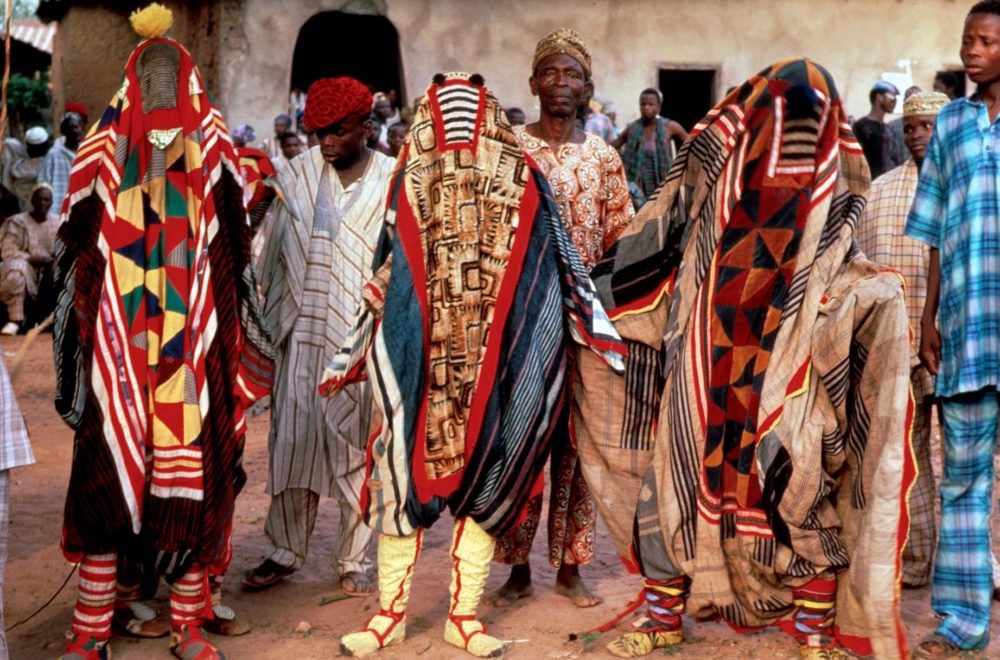
In recent years, a growing movement among young Africans has begun calling for a “return to the ancestors.” On social media, in cultural discussions, and even in academic circles, some argue that Africans must abandon Christianity and return to traditional African spirituality, especially systems that emphasize ancestral reverence.
The argument often goes like this: before Christianity and Islam arrived in Africa, Africans already had their own spiritual systems. These systems honored the ancestors, respected nature, and preserved African identity. Therefore, returning to the ancestors is presented as a way of reclaiming African dignity and spiritual authenticity.
At first glance, this argument can sound compelling. It appeals to history, culture, and identity. However, once we examine it more carefully, several serious philosophical, historical, and moral questions begin to appear.
The issue is not whether our ancestors existed. Of course they did. The issue is whether ancestors deserve spiritual authority over the living, or whether they should be treated as divine intermediaries between humanity and God.
To answer that question honestly, we must think carefully.
Honoring Parents Is Not the Same as Worshiping Ancestors
Every human being has ancestors. Our parents are our immediate ancestors, and their parents are our ancestors as well.
Most cultures around the world encourage respect for parents and elders. Respecting one’s family lineage, preserving memories of those who came before us, and learning from their experiences are valuable practices that help maintain cultural continuity and social stability.
Even the Bible strongly affirms this principle. One of the Ten Commandments states:
“Honor your father and your mother”
(Exodus 20:12).
Honoring parents includes caring for them, respecting their wisdom, and remembering them with gratitude. But honoring someone is not the same thing as worshiping them.
There is a clear difference between remembering ancestors and attributing supernatural authority to them. Many traditional systems move beyond simple remembrance and enter into spiritual practices that assume ancestors possess ongoing spiritual power over the living.
In such systems, ancestors are believed to:
– Observe the lives of their descendants
– Influence events in the physical world
– Receive offerings or libations
– Act as intermediaries between humans and the divine realm
When practices reach this level, they go far beyond honoring family heritage. They enter the realm of spiritual mediation, where ancestors are treated as supernatural agents capable of guiding, protecting, or judging the living. But this assumption raises an important question:
What evidence do we have that human beings gain divine powers after death?
None!
The Moral Problem: Not Every Ancestor Was Righteous
One of the most serious problems with ancestor veneration is the assumption that ancestors deserve reverence simply because they lived before us.
History teaches us something very different: human beings are morally mixed. Some are honorable, courageous, and wise. Others are selfish, violent, or unjust. This reality does not suddenly change when someone dies.
Throughout human history, people have committed both noble and terrible actions. Our ancestors were no exception. They were human beings shaped by the same struggles, ambitions, and moral failures that affect every generation.
One historical example illustrates this clearly.
The Trans-Atlantic Slave Trade was one of the most devastating events in African history. Between the 15th and 19th centuries, millions of Africans were forcibly transported across the Atlantic and enslaved in the Americas.
This tragic system involved European merchants, American plantation economies, and African intermediaries who captured or sold prisoners of war and other individuals into slavery.
Some African states and political systems participated in aspects of this trade during certain historical periods. For instance, historians have documented the involvement of the Kingdom of Dahomey, which developed a highly organized system for capturing war captives and selling them to European traders.
Similarly, the Oyo Empire engaged in regional warfare that sometimes produced captives who entered slave markets.
It is important to understand that this does not mean African societies were uniquely responsible for slavery. Europeans, Arabs, and others were deeply involved in the system as well. Slavery has existed in many civilizations throughout history including among Africans societies.
But the key point remains: not all ancestors were morally perfect.
If some ancestors participated in injustice or violence, then the idea that ancestors deserve automatic spiritual authority becomes very difficult to defend. Age does not equal righteousness.
The Historical Question: Why Didn’t Traditional Spiritual Systems Prevent Catastrophe?
Another argument often presented by defenders of ancestral religion is that traditional African spirituality possessed deep wisdom and spiritual power long before the arrival of foreign religions. Yet history raises an important question.
Before Christianity spread widely across Africa, many societies already practiced traditional religions involving divination, charms, protective rituals, and ancestor consultation.
This raises what may be called a deeper historical and philosophical problem. If ancestral spirits and traditional deities truly possess knowledge of future events and the power to intervene in human affairs, then the tragedy of the Trans-Atlantic Slave Trade becomes extremely difficult to explain.
A disaster that lasted for centuries, involved multiple regions of Africa, and led to the displacement of millions should have produced overwhelming spiritual warnings, prophetic guidance, or organized resistance inspired by the spiritual realm. Yet history records no continent-wide revelations from revered figures such as Ogun, Sango, or Esu that prevented or even significantly disrupted the trade. The silence is striking.
Perhaps the most difficult challenge for ancestor-centered spirituality can be described as the Ancestor Silence Problem. If these spiritual powers were truly responsible for guiding and protecting their followers, why did they not mobilize their devotees, expose the dangers in advance, or inspire unified resistance capable of halting the catastrophe? The absence of such evidence forces us to confront an uncomfortable possibility: perhaps the spiritual authority attributed to these figures is far greater than the historical reality can sustain.
The Trans-Atlantic Slave Trade continued for centuries. Entire communities were devastated. Millions of people were displaced from their homeland. If ancestors truly guide and protect their descendants, why did such an enormous catastrophe unfold over several centuries without widespread supernatural warning or intervention? This silence raises serious questions about the assumption that ancestors actively guide the living.
This question is not meant to insult African traditions. It is simply an honest historical inquiry.
The Problem of Competing Ancestors
Another difficulty with ancestor veneration arises when we consider the diversity of human cultures.
Every family has its own ancestors. Every clan has its own lineage. Every tribe has its own historical traditions. But these traditions often conflict with one another.
Some ancestors practiced customs that others rejected. Some cultures permitted practices that modern societies now consider morally unacceptable. If ancestral tradition determines truth, then truth becomes fragmented and contradictory.
For example, if one tribe’s ancestors practiced certain rituals while another tribe’s ancestors condemned those rituals, whose tradition should be followed?
If every ancestral tradition carries equal authority, then there is no objective standard for distinguishing right from wrong. Truth becomes relative to lineage. But moral truth cannot depend on which family someone happens to be born into.
The Ancestor Authority Problem
Philosophers sometimes identify a deeper logical issue behind ancestor veneration.
If ancestors deserve authority simply because they lived before us, then every generation must obey the previous one. But this leads to a serious problem.
Our ancestors also had ancestors. And those ancestors had ancestors before them. If every generation must simply repeat the traditions of the previous generation, then human societies would never be able to correct mistakes or improve morally.
For example, many ancient societies practiced slavery. If tradition alone determined moral truth, then slavery would still be morally acceptable today. But most people now recognize slavery as deeply unjust.
This demonstrates an important principle:
Tradition alone cannot determine truth. Human beings must evaluate traditions in light of moral reasoning and truth, not simply accept them because they are old.
Honoring Heritage Without Worshiping Ancestors
It is important to clarify something at this point. Rejecting ancestor worship does not mean rejecting African culture or history.
Cultural heritage is valuable. Traditions, languages, music, art, and family histories form an important part of human identity.
Remembering ancestors can involve:
– Preserving family stories
– Respecting elders
– Maintaining cultural traditions
– Learning from historical experience
These practices strengthen communities and connect generations. But remembering ancestors is not the same thing as assigning them supernatural authority over our lives. Respect is different from worship.
The Biblical Perspective
The biblical worldview offers a balanced approach to this issue. The Bible strongly encourages respect for parents and elders. Family honor and generational responsibility are important moral principles.
However, the Bible consistently rejects the idea that the dead should be invoked for guidance or treated as spiritual intermediaries.
Instead, Scripture teaches that God alone possesses ultimate authority over life, death, and the future. Human beings—no matter how respected or wise—remain finite and dependent on God.
Even the greatest heroes of the Bible were not worshiped. Figures such as Abraham, Moses, and David were honored for their faith and leadership, but they were never treated as divine beings. Worship belongs to God alone
The Deeper Question
Ultimately, the discussion about ancestors leads to a deeper philosophical question.
Every ancestor who ever lived had something in common with us.
- They were born.
- They lived for a time.
- And eventually they died.
Death reminds us that human beings are not self-sufficient. Our lives depend on something greater than ourselves.
Therefore, the most important question is not whether our ancestors existed.
The real question is this:
Who created our ancestors?
If ancestors are created beings, then they themselves depend on a higher source of life.
That source—the Creator—is greater than any ancestor.
And that is the One who deserves worship.
Conclusion
Calls to “return to the ancestors” often appeal to nostalgia, cultural pride, and a desire to reclaim African dignity. These are understandable emotions. Honoring our heritage, preserving traditions, and learning from the lives of those who came before us are all morally and socially valuable.
But there is a critical distinction that cannot be ignored: honor does not equal worship. Our ancestors were human beings—some wise, some flawed, some honorable, and some complicit in injustice. They lived, struggled, and ultimately died, just as we will. They were not omniscient, omnipotent, or morally infallible.
History demonstrates that human limitations persisted even in the realm of the spiritual. Powerful traditional systems, charms, and deities did not prevent the Trans-Atlantic Slave Trade, one of the greatest catastrophes in African history. The deities remained silent. Ancestors were unable—or unwilling—to intervene. The Ancestor Silence Problem is a stark reminder that putting faith in human or ancestral power cannot offer the protection, justice, or guidance that only God provides.
Philosophically, blindly following ancestors creates another problem: if age or lineage automatically grants authority, then every generation must submit to the previous one, perpetuating mistakes and injustice. Truth and morality cannot be inherited; they must be discerned, tested, and grounded in ultimate authority.
Therefore, while it is right to respect, honor, and learn from our ancestors, ultimate worship, obedience, and reliance must belong to God alone—the Creator of both the living and the dead. Our parents, grandparents, and forebears were not gods, and they never claimed that authority. Honoring them is good; placing them above God is dangerous.
In the end, the most important question is not whether our ancestors existed or what powers tradition attributes to them. The real question is: Who created them? Whoever gave life, wisdom, and breath to our ancestors is far greater than they. That Creator is the One worthy of our worship, our trust, and our ultimate allegiance.
Respect the ancestors. Learn from history. But never give to human beings—even those who came before you—the worship that belongs to God alone.

 Why Jesus Apologetics
We welcome respectful comments and questions as we explore the truth of the gospel.