
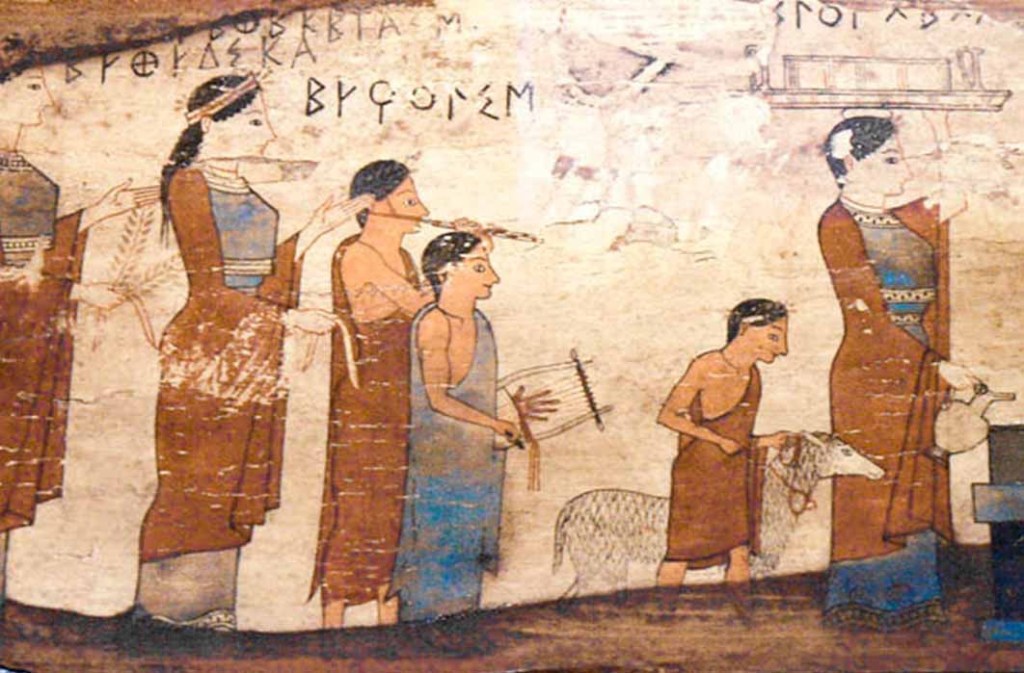
Dear children, keep yourselves from idols
1 John 5:21
In recent discussions, particularly those involving critiques from Muslim Polemists, there’s a recurring claim that the Apostle Paul was labeled a heretic by “earlier Christians” for allegedly permitting the consumption of food sacrificed to idols. This accusation often draws on supposed quotes from Jesus forbidding such food, agreements among the disciples (including James), and references to Revelation. Furthermore, it’s tied to the Ebionites, portrayed as early Christians who rejected Paul for misrepresenting core teachings.
However, a closer examination reveals significant misrepresentations.
This blog post aims to address these points systematically and in detail. For each key element—the Ebionites, Jesus’ teachings, the disciples’ agreement (via the Jerusalem Council and James), Revelation, and Paul’s own words—we’ll quote the relevant texts in their larger contexts. Then, we’ll explain what the text is saying and what it is not saying, drawing on historical, cultural, and theological insights. The goal is clarity: to show how these elements interconnect without oversimplification or distortion. This will be thorough, as a superficial treatment wouldn’t do justice to the complexity of early Christian debates on food, idolatry, and Gentile inclusion. Let us talk about the Ebionites
The Ebionites Were Not “Earlier Christians,” But a Later Sect with Fringe Views
The claim often positions the Ebionites as “earlier Christians” who called Paul a heretic for permitting idol-sacrificed food. Let’s examine the historical context.
The Ebionites were not “earlier Christians” but a later sect that post-dated Paul, and their views were fringe, not representative of mainstream early Christianity. The Ebionites were a Jewish-Christian group that emerged in the 2nd century AD, likely after the destruction of the Jerusalem Temple in 70 AD and well after Paul’s death (around 64-67 AD). Early church fathers like Irenaeus (in Against Heresies, written around 180 AD) describe them as follows:
“Those who are called Ebionites agree that the world was made by the true God; but their opinions with respect to the Lord are similar to those of Cerinthus and Carpocrates. They use the Gospel according to Matthew only, and repudiate the Apostle Paul, maintaining that he was an apostate from the law.”
(Irenaeus, Against Heresies 1.26.2)
Epiphanius, in his Panarion (around 375 AD), provides more detail:
“They [Ebionites] do not accept the whole Law; for they use only parts of it… They reject the apostles and often repudiate Paul, calling him an apostate from the Law… They say that he [Paul] was Greek… and that he became a proselyte, but that he apostatized from the Law.”
(Epiphanius, Panarion 30.16.6-9, 30.18.1)
These descriptions come from patristic sources, as no direct Ebionite writings survive intact, though fragments like the Ebionite Gospel (a variant of Matthew) suggest they emphasized strict Torah observance, vegetarianism in some cases, and rejected Paul’s epistles.
These accounts indicate that the Ebionites were a Judaizing sect—insisting that all Christians, including Gentiles, must fully observe the Mosaic Law (e.g., circumcision, dietary laws). They viewed Paul as a heretic because his teachings on grace, freedom from the Law for Gentiles (e.g., Galatians 3:28, Romans 14), and contextual allowances for food seemed to undermine Jewish purity laws. Regarding idol food, they likely amplified any perceived leniency in Paul into outright endorsement of paganism, fitting their narrative of him as an “apostate.” This stemmed from their isolationist theology, which prioritized Jewish identity over the inclusive gospel Paul preached.
This is not evidence that the Ebionites were “earlier Christians” predating or contemporary with Paul. They post-date him by at least a century, emerging in a post-Temple era when Jewish-Christian tensions intensified. Their views were not mainstream like we said earlier; the broader church, as seen in the Jerusalem Council (Acts 15, around 49-50 AD), had already rejected full Law observance for Gentiles. The Ebionites’ rejection of Paul wasn’t about a direct quote from Jesus or disciples forbidding idol food universally but about their sectarian bias against Gentile inclusion. They misrepresented Paul by ignoring his prohibitions against idolatry (as we’ll see soon), much like modern critiques do. Labeling them “earlier Christians” is anachronistic and ignores that figures like Peter and James endorsed Paul’s ministry (Galatians 2:9, Acts 15).
Jesus’ Teachings on Food—Inner Purity Over External Taboos
The claim includes that Jesus said “no one should eat” food sacrificed to idols, but no such direct quote exists. Let’s examine relevant Gospel passages in context.
In Matthew 15:1-20 (paralleled in Mark 7:1-23), Jesus addresses Pharisees’ criticism of his disciples eating with unwashed hands, violating tradition:
“Then Pharisees and scribes came to Jesus from Jerusalem and said, ‘Why do your disciples break the tradition of the elders? For they do not wash their hands when they eat.’ He answered them, ‘And why do you break the commandment of God for the sake of your tradition? … Hear and understand: it is not what goes into the mouth that defiles a person, but what comes out of the mouth; this defiles a person.’ … ‘Do you not see that whatever goes into the mouth passes into the stomach and is expelled? But what comes out of the mouth proceeds from the heart, and this defiles a person. For out of the heart come evil thoughts, murder, adultery, sexual immorality, theft, false witness, slander. These are what defile a person. But to eat with unwashed hands does not defile anyone.’”
(Matthew 15:1-3, 10-11, 17-20, ESV)
Mark adds: “Thus he declared all foods clean” (Mark 7:19).
No Gospel records Jesus explicitly addressing food sacrificed to idols. Indirectly, his teachings on idolatry (e.g., Matthew 4:10, “You shall worship the Lord your God and him only shall you serve”) prohibit pagan worship.
Jesus emphasizes inner spiritual purity over external rituals. Defilement comes from the heart (sinful intentions) , not food itself. This shifts focus from Old Testament food laws (e.g., Leviticus 11) to moral and ethical concerns. By declaring “all foods clean,” Jesus lays groundwork for Gentile inclusion without dietary restrictions, prioritizing love for God and neighbor (Matthew 22:37-40). This doesn’t endorse idolatry but reorients purity around faith and ethics.
This is not a permission to participate in idolatrous acts, like eating in pagan temples. Jesus doesn’t address idol-sacrificed food specifically, so claiming he forbade it universally is unsupported—it’s likely a confusion with Old Testament bans (e.g., Exodus 34:15, “lest you make a covenant with the inhabitants of the land, and when they whore after their gods and sacrifice to their gods and you are invited, you eat of his sacrifice”). Nor is it a strict taboo on all potentially tainted food; Jesus critiques legalism, not creates new ones. Misattributing a direct forbid to Jesus distorts his message of heart-centered faith.
The Disciples’ Agreement—The Jerusalem Council and James
The claim references James saying Gentiles should not eat idol-sacrificed food, implying universal agreement against Paul.
In Acts 15:1-29, the council addresses whether Gentile converts must follow Jewish law:
“But some men came down from Judea and were teaching the brothers, ‘Unless you are circumcised according to the custom of Moses, you cannot be saved.’ … The apostles and the elders were gathered together to consider this matter. … Peter rose and said to them, ‘…why are you putting God to the test by placing a yoke on the neck of the disciples that neither our fathers nor we have been able to bear? But we believe that we will be saved through the grace of the Lord Jesus, just as they will.’ … Then it seemed good to the apostles and the elders, with the whole church, to choose men from among them and send them to Antioch with Paul and Barnabas. … For it has seemed good to the Holy Spirit and to us to lay on you no greater burden than these requirements: that you abstain from what has been sacrificed to idols, and from blood, and from what has been strangled, and from sexual immorality. If you keep yourselves from these, you will do well.”
(Acts 15:1,6,10-11,22,28-29, ESV)
James proposes the decree (15:19-21), citing Amos 9:11-12 for Gentile inclusion.
The council affirms salvation by grace, not Law observance, but imposes minimal requirements for unity in mixed communities. “Abstain from what has been sacrificed to idols” targets practices offensive to Jewish believers (e.g., avoiding blood echoed Leviticus 17:10-14). It’s pastoral, promoting harmony amid cultural clashes—Corinth’s markets sold temple-sacrificed meat routinely. The decree supports Paul’s mission (he’s present and endorsed).
This is not a universal, eternal moral absolute forbidding all idol-related food. It’s contextual, not imposing full kosher laws (no mention of pork). It doesn’t contradict Paul’s later nuances (he upholds the spirit in 1 Corinthians). Nor does it indicate disciple opposition to Paul; they agree on Gentile freedom. Misrepresenting this as anti-Paul ignores the council’s unity.
Revelation’s Condemnation—Targeted at Idolatrous Compromise
The claim quotes Revelation as agreeing with the forbid.
In Revelation 2:12-17 (to Pergamum):
“And to the angel of the church in Pergamum write: … ‘But I have a few things against you: you have some there who hold the teaching of Balaam, who taught Balak to put a stumbling block before the sons of Israel, so that they might eat food sacrificed to idols and practice sexual immorality. … Therefore repent. If not, I will come to you soon and war against them with the sword of my mouth.’”
(Revelation 2:12,14,16, ESV)
These are part of Jesus’ messages to seven churches via John (around 95 AD).
Jesus condemns “teachings” promoting compromise with pagan culture—eating idol food in idolatrous feasts (linked to immorality, referencing Numbers 25:1-2 for Balaam, 1 Kings 16:31 for Jezebel). In Asia Minor, this involved guild banquets or temple prostitution. It’s a call to repentance from deliberate idolatry, echoing Acts 15’s spirit.
This is not a blanket ban on all meat possibly sacrificed earlier (e.g., market-bought). It targets participatory idolatry, not neutral consumption. Nor does it critique Paul; Revelation aligns with his warnings against demon-fellowship (1 Cor 10). Misusing it as anti-Paul ignores the context of persecution-driven compromise.
Paul’s Teachings in 1 Corinthians—A Nuanced Freedom, Not Blanket Permission
To fully grasp Paul’s instructions in 1 Corinthians 8–10, we must understand the cultural and social environment of ancient Corinth. Rebuilt by Julius Caesar in 44 BC as a Roman colony after its destruction in 146 BC, Corinth had become one of the wealthiest and most cosmopolitan cities in the Roman Empire by the mid-1st century AD. Strategically located on the Isthmus, it was a major trade hub connecting land and sea routes, attracting merchants, sailors, freedmen, slaves, and elites from across the Mediterranean.
Religious Landscape: A City of “Many Gods and Many Lords”
Corinth was notoriously polytheistic. Paul himself notes, “even if there are so-called gods, whether in heaven or on earth (as indeed there are many ‘gods’ and many ‘lords’)” (1 Corinthians 8:5). The city featured prominent temples to Greek and Roman deities, including:
- The Temple of Apollo (with its famous archaic columns still visible today).
- The Acrocorinth sanctuary to Aphrodite, historically linked to cult prostitution (though debated in the Roman period).
- Temples to Asklepios (god of healing), Demeter and Kore, Isis and Sarapis (popular mystery cults), Poseidon, and others.
- The Imperial Cult, honoring Roman emperors as divine or semi-divine figures, which dominated public life under Roman rule.
These temples were not isolated religious sites but integral to civic, social, and economic life. Animal sacrifices were routine: on altars before statues of gods, during festivals, civic ceremonies, family rites, or guild (trade association) events. A portion of the animal (often fat and organs) was burned as an offering to the deity—the smoke symbolized prayers ascending. The remaining meat—often substantial—was not wasted.
Meat Supply and Consumption: Temples as the Primary Source
In the ancient world, meat was a luxury, consumed infrequently by most people (the diet was largely grain-based). When animals were slaughtered for meat, it was almost always in a religious context—no private butcher shops existed as we know them. Temples served as the main “butchers”:
- After sacrifice, excess meat was sold cheaply in the public marketplace (macellum in Latin; μάκελλον in Greek, referenced in 1 Corinthians 10:25: “Eat whatever is sold in the meat market without raising any question”).
- Priests received portions, and leftovers flooded markets or were distributed at banquets.
- Much of the meat available—beef, pork, lamb, goat—was thus “idol meat” (εἰδωλόθυτον, eidolothyton), having been consecrated in a temple ritual.
This created practical dilemmas for new converts:
a. Economic reality
Cheaper temple meat was widely available and tempting, especially for poorer believers.
b. Social pressure
Business dealings, trade guilds, family gatherings, weddings, or civic banquets often occurred in temple precincts or adjacent dining rooms (many temples had banqueting facilities). Refusing to attend or eat could damage relationships, careers, or social standing—immense pressure in a status-conscious city like Corinth.
c. Former pagans’ consciences
Many Corinthian Christians were recent converts from Greco-Roman paganism. Eating such meat might trigger old associations with idolatry, even if intellectually they knew idols were “nothing.”
This backdrop explains Paul’s careful distinction between:
1. Eating in temple settings (direct participation in or near cultic meals, often with libations, prayers, or immoral elements like prostitution in some cults): This implied fellowship with demons (1 Corinthians 10:20–21) and was strictly forbidden.
2. Neutral consumption (market-bought meat or at a private home, where origin was unknown or incidental): This was permissible unless it caused offense or knowingly endorsed idolatry.
Scholars (e.g., from archaeological studies of Corinthian temples and inscriptions) confirm temples like Asklepios or Isis had dining areas for social meals, blending religion and festivity. The Imperial Cult added political layers—refusing emperor-related sacrifices could seem disloyal.
Corinth’s environment made “food sacrificed to idols” unavoidable in daily life. It wasn’t abstract theology but a lived tension: How could believers navigate a society where idolatry permeated commerce, socializing, and civic duty? Paul’s response addresses real pastoral needs—balancing theological truth (idols have no existence) with love for others and separation from idolatry.
Paul’s Audience
Here we will explore so many modern critics (including some Islamic apologists or those echoing Ebionite-style arguments) misunderstand or misrepresent Paul’s position in 1 Corinthians 8–10.
First, Paul is not writing to a primarily Jewish audience or debating within a Jewish legalistic framework (like whether Gentiles must keep kosher laws). Instead, he’s addressing a church in Corinth that was overwhelmingly Gentile in background—people who had grown up immersed in Greco-Roman paganism, with its temples, festivals, sacrifices, and social customs. The concerns he’s tackling are those of former pagans navigating their new Christian faith in a city where idolatry was woven into everyday life, commerce, and social relationships.
The Corinthian Church: Mostly Gentile Converts from Paganism
The church Paul planted in Corinth (Acts 18) drew primarily from non-Jewish people—traders, laborers, freed slaves, and others in a bustling, cosmopolitan port city. While a few Jewish believers existed (e.g., Crispus the synagogue leader in Acts 18:8, or Aquila and Priscilla), the majority were Gentiles who had previously worshiped multiple gods. Paul describes the broader Corinthian world as one with “so-called gods… many ‘gods’ and many ‘lords’” (1 Corinthians 8:5), reflecting the polytheistic environment these converts knew intimately.
Their questions weren’t about Old Testament purity laws (which Jews would have debated) but practical survival and conscience in a pagan society:
- Could they buy and eat cheap meat from the public market, knowing most of it came from temple sacrifices?
- Could they accept dinner invitations from unbelieving friends or family without inquiring about the meat’s origin?
- How should they handle social pressures from guilds, family events, or civic life that often involved temple meals?
Paul isn’t responding to Jewish critics saying, “You must keep the Law!” He’s guiding ex-pagans who are tempted to compromise or who are overly scrupulous about anything remotely tied to their old idols.
Paul Explicitly Forbids Participation in Idol Feasts/Festivals
Critics who accuse Paul of “permitting” idolatry often overlook his clear prohibition against any direct involvement in pagan worship settings.
In 1 Corinthians 10:14-22 (larger context):
“Therefore, my beloved, flee from idolatry. I speak as to sensible people; judge for yourselves what I say. The cup of blessing that we bless, is it not a participation in the blood of Christ? The bread that we break, is it not a participation in the body of Christ? Because there is one bread, we who are many are one body, for we all partake of the one bread. Consider the people of Israel: are not those who eat the sacrifices participants in the altar? What do I imply then? That food offered to idols is anything, or that an idol is anything? No, I imply that what pagans sacrifice they offer to demons and not to God. I do not want you to be participants with demons. You cannot drink the cup of the Lord and the cup of demons. You cannot partake of the table of the Lord and the table of demons. Shall we provoke the Lord to jealousy? Are we stronger than he?” (ESV)
Paul equates eating at pagan temple feasts (where sacrifices occurred as part of worship, often with libations, prayers, and sometimes immorality) to “participation with demons.” This is an absolute no—it’s incompatible with Christian communion. He’s not talking about neutral food but active fellowship in idolatrous rituals. In Corinth, many temples had dining rooms for such cultic banquets, and guilds or families often held events there. Paul forbids Christians from joining those.
Public/Market Food: Allowed, But with Strict Limits—Not Recommended or Encouraged
For everyday, public food (market-bought or at a home), Paul allows it under conscience-guided conditions, precisely because these Gentile believers lived in a world where almost all meat had some prior sacrificial connection.
In 1 Corinthians 10:25-30 (larger context):
“Eat whatever is sold in the meat market without raising any question on the ground of conscience. For ‘the earth is the Lord’s, and the fullness thereof.’ If one of the unbelievers invites you to dinner and you are disposed to go, eat whatever is set before you without raising any question on the ground of conscience. But if someone says to you, ‘This has been offered in sacrifice,’ then do not eat it, for the sake of the one who informed you, and for the sake of conscience—I do not mean your conscience, but his. For why should my liberty be determined by someone else’s conscience? If I partake with thankfulness, why am I denounced because of that for which I give thanks? So, whether you eat or drink, or whatever you do, do all to the glory of God. Give no offense to Jews or to Greeks or to the church of God.” (ESV)
Here, Paul says:
a. Don’t obsessively inquire about origins when buying in the market—most meat likely was from temples, but idols are “nothing,” and food itself doesn’t spiritually defile (echoing 8:4-8).
b. At a dinner (even with unbelievers), eat freely unless the host or someone explicitly flags it as sacrificed—then abstain to avoid offending their conscience or appearing to endorse idolatry.
This is permission with heavy qualifications, driven by love (not causing stumbling, 8:9-13) and avoiding even the appearance of compromise. Paul isn’t recommending or encouraging it as ideal; he’s saying it’s not inherently sinful in neutral contexts, but freedom must yield to love. In 8:13, he declares he’d abstain forever if it harmed another.
Why Critics Miss This: Imposing a Jewish Lens on a Gentile Context
Many critics read Paul through a Jewish or modern legalistic filter, assuming he’s debating Torah observance or blanket permissions for pagan practices. But:
- He’s not addressing Jews worried about “unclean” meat.
- He’s not telling ex-pagans they can join idol festivals.
- He’s telling a mostly Gentile church: Idolatry itself is forbidden (no temple participation), but neutral food in daily life isn’t automatically tainted—handle it with love, conscience, and separation from worship.
Paul’s stance protects new believers from slipping back into paganism while affirming theological truth (one God, idols nothing) and practical charity. If he were “permitting” idolatry, he’d contradict his own fierce warnings against it elsewhere (e.g., Galatians 5:20, Ephesians 5:5).
This nuance shows Paul’s pastoral genius: He neither imposes Jewish food laws on Gentiles nor lets them slide into syncretism. He calls them to full devotion to Christ in their real-world pagan surroundings.
Comparison to Romans 14: Similar Principles, Different Context
Romans 14 addresses food disputes in a mixed Jewish-Gentile church, likely involving clean/unclean concerns or vegetarian abstention.
Romans 14:13-23 (ESV excerpt):
“…decide never to put a stumbling block or hindrance in the way of a brother. I know… that nothing is unclean in itself, but it is unclean for anyone who thinks it unclean… By what you eat, do not destroy the one for whom Christ died… It is good not to eat meat… that causes your brother to stumble… whatever does not proceed from faith is sin.”
Similarities
Both affirm food neutrality (“nothing unclean,” Rom 14:14; idols “nothing,” 1 Cor 8:4). “Strong” have liberty; “weak” have scruples. Strong must not despise or stumble weak—prioritize love, peace, edification.
Differences
1 Corinthians targets idol meat in pagan Corinth (temple feasts forbidden, market allowed with caveats). Romans is broader (no idol/demon mention; includes days). Corinth is corrective against abuse; Romans irenic on mutual acceptance.
Paul’s theology is consistent: grace frees from ritual; love limits freedom.
Conclusion
Paul neither permits idolatry nor imposes rigid avoidance. He forbids temple participation (demonic fellowship) but allows market/home meat in neutral settings, qualified by conscience and love. In pagan Corinth, total separation from idol-tainted food would mean “going out of the world”—impossible for mission-minded believers.
This pastoral wisdom counters misrepresentations: Paul upholds monotheism, guards against compromise, and promotes unity. It aligns with Jesus’ inner-purity focus, the Jerusalem Council’s minimal burdens, and Revelation’s warnings against idolatrous compromise.
For Christians today, the principle endures: Engage the world faithfully, exercise liberty wisely, and always choose love over self.

 Why Jesus Apologetics
We welcome respectful comments and questions as we explore the truth of the gospel.