
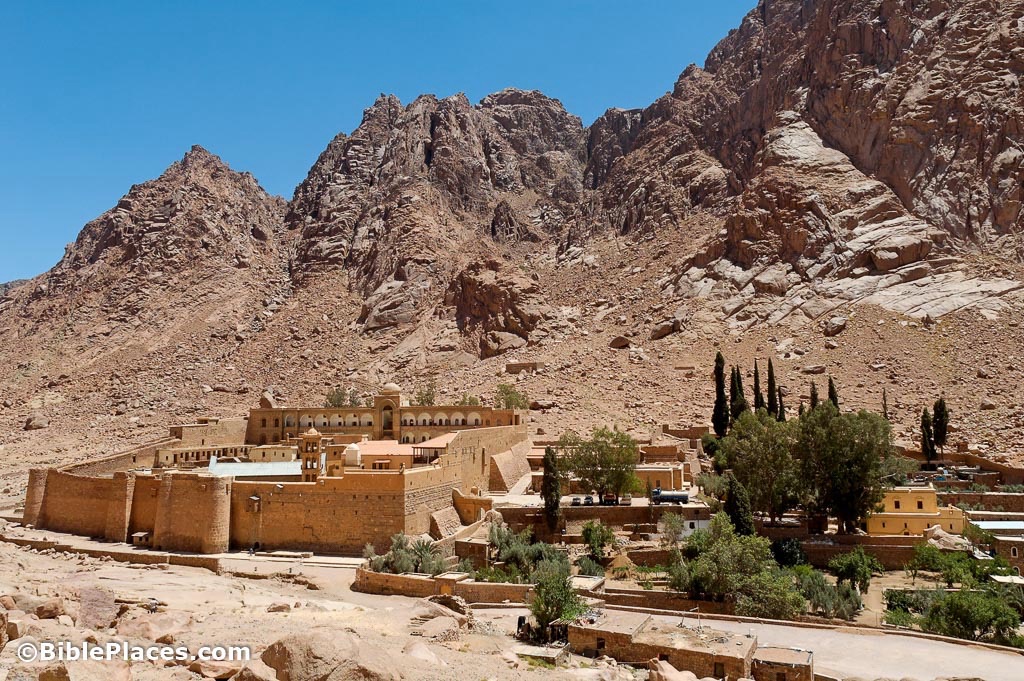
In a recent social media post, a Bible critic attempted to mock the scriptural account of the Israelites’ journey with this quip:
“Shortest Distance from Sinai to Israel is 650 Metres while the longest distance is about 200 KM. How did it take the Israelites 40 Years from the Sinai to Israel? Our God is a wonderful God.”
On the surface, this seems like a clever gotcha moment, highlighting what appears to be an absurd timeline in the Bible. But a closer examination reveals a fundamental abuse of geography, a misunderstanding of the biblical narrative, and a selective ignoring of the historical and scriptural context. In this blog post, we’ll dissect these issues step by step, exposing the flaws in the critique and providing a clearer picture of what the Bible actually describes.
The Geographical Misrepresentation — Modern Borders vs. Ancient Realities
Let’s start with the critic’s core claim about distances. The “shortest distance from Sinai to Israel” being 650 meters sounds suspiciously like a reference to a specific border point, perhaps a narrow crossing or a measurement at a checkpoint. Indeed, the modern border between Egypt’s Sinai Peninsula and Israel runs for approximately 206 kilometers along the eastern edge of the peninsula, from the Gaza tripoint to the Gulf of Aqaba.
Other sources describe the overall trek from Egypt to Canaan as potentially coverable in 200-250 miles if taking a coastal route, but the biblical path veered inland for divine reasons we’ll explore later. To visualize this, consider a map of the Sinai Peninsula today:
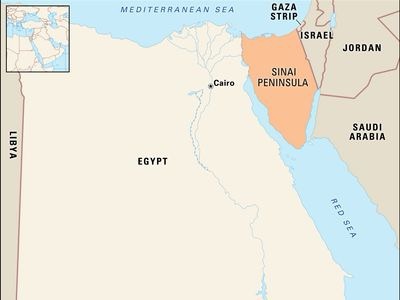
The peninsula is a triangular landmass wedged between the Mediterranean Sea, the Gulf of Suez, and the Gulf of Aqaba—part of Egypt since ancient times, though briefly occupied by Israel in the 20th century. The critic’s “650 meters” might stem from a Google Maps measurement at a border fence or crossing like Taba, but applying this to the Exodus story is like mocking a historical migration by citing today’s airline routes. It’s an anachronistic strawman that ignores the ancient context.
The Biblical Journey —Not a Straight Line, But a Divine Detour
Now, let’s turn to the Bible itself. The story of the Exodus isn’t about a leisurely stroll gone wrong—it’s a profound narrative of liberation, covenant, rebellion, and redemption. According to Exodus chapters 12-19, the Israelites fled Egypt under Moses’ leadership, crossing the Red Sea (or Sea of Reeds) and heading to Mount Sinai. This initial leg alone covered hundreds of kilometers: from Goshen in Egypt to Sinai, estimates suggest about 700 km total, taking around 47 days in the biblical timeline.
At Sinai, they camped for nearly a year, receiving the Law, building the Tabernacle, and forming a covenant with God (Exodus 19-Numbers 10). Then, they set out for Canaan via Kadesh-Barnea, a key oasis on the southern edge of the Promised Land. Deuteronomy 1:2 explicitly states that the distance from Horeb (Sinai) to Kadesh-Barnea is an “eleven-day journey” under normal conditions—aligning with real-world distances of about 150-200 km along ancient trade routes.
But here’s where the critic’s mockery falls apart: the Israelites didn’t take the direct route because of their own actions. In Numbers 13-14, Moses sent 12 spies into Canaan to scout the land. Ten returned with a fearful report, exaggerating the dangers and inciting panic among the people. Despite Joshua and Caleb’s faith, the Israelites rebelled, refusing to enter the land God had promised. This unbelief was the turning point.
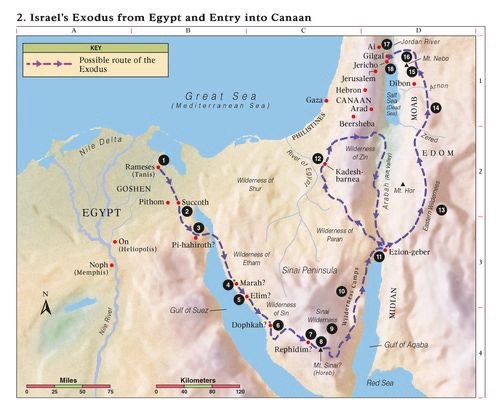
To illustrate the full route, here’s a map of the traditional Exodus path, showing the journey from Egypt through Sinai and into Canaan:
And another detailed view for clarity:
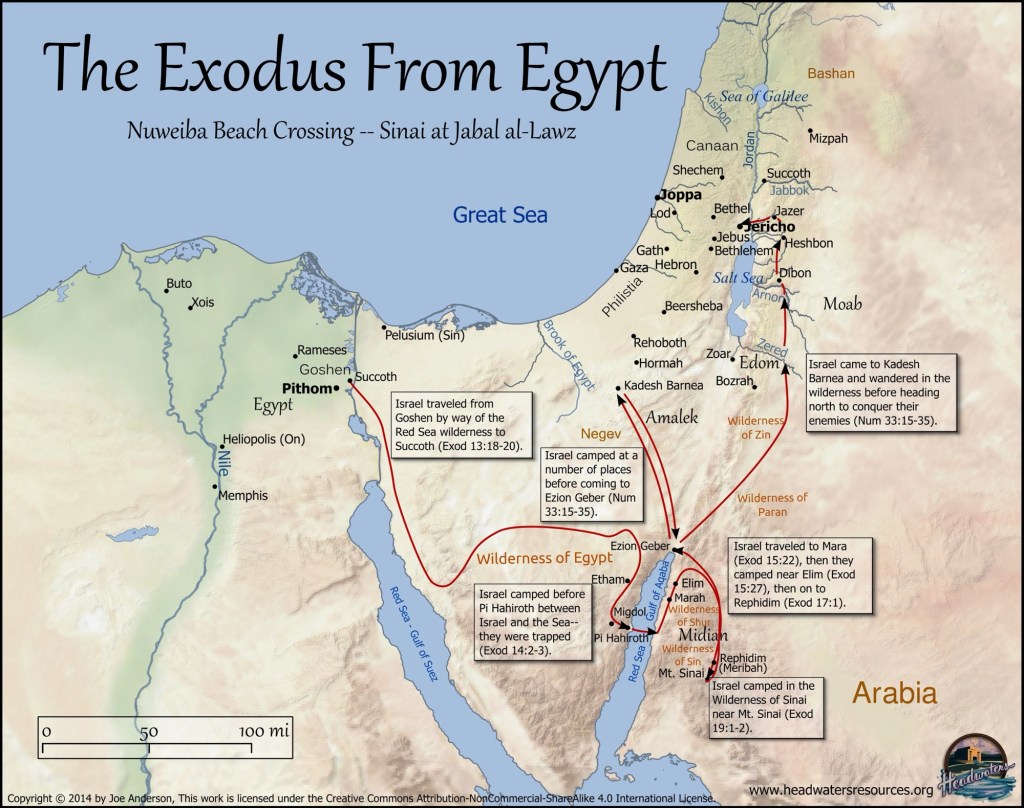
As these maps show, the path wasn’t linear. After the rebellion, the Israelites turned back into the wilderness, looping through the deserts of Paran, Zin, and beyond—areas now part of the Negev and Sinai regions.
The Core Reason —Rebellion and Divine Judgment, Not Lost Wandering
The 40 years resulted directly from unbelief:
i. God commanded entry into Canaan from Kadesh (Numbers 13:1-2).
ii. 12 spies scouted for 40 days (Numbers 13:25).
iii. 10 spies spread fear:
“We seemed like grasshoppers… the land devours its inhabitants”
(Numbers 13:32-33).
iv. The people rebelled:
“Why is the Lord bringing us into this land, to fall by the sword? … Would it not be better for us to go back to Egypt?”
(Numbers 14:3).
v. God’s response:
“How long will this people despise me? … None of the men who have seen my glory… shall see the land… Your children… shall wander in the wilderness 40 years and shall bear your guilt, until your dead bodies lie in the wilderness… according to the number of the days in which you spied out the land, forty days—a year for each day”
(Numbers 14:22-34, abridged).
This was deliberate judgment: one year per day of spying. The adult generation (except Joshua and Caleb) died off, ensuring only a faithful generation entered under Joshua.
This theme recurs in Scripture. Psalm 95:10-11 reflects: “For forty years I loathed that generation… They shall not enter my rest.” Quoted in Hebrews 3-4, it warns against unbelief.
Why 40 Years? The Scriptural Reason for the Wandering
The 40-year timeline wasn’t due to bad navigation or an inexplicably slow pace (as the critic implies, perhaps calculating a ridiculous 15 km per year).
It was a divine judgment. In Numbers 14:26-35, God declared that the faithless generation would wander the wilderness until they died off—one year for each day the spies spent in Canaan (40 days total). Only their children, along with Joshua and Caleb, would enter the Promised Land.
This “wilderness wandering” served multiple purposes: punishment for disobedience, a time of testing and refinement, and a lesson in dependence on God. The Bible describes miraculous provisions like manna, water from rocks, and protection from enemies—emphasizing God’s faithfulness amid human failure.
Far from a logistical blunder, it’s a story of spiritual growth. As one source explains, their faith wavered at crucial moments, preventing immediate entry into Canaan.
The critic abuses the Bible by reducing this rich narrative to a punchline, ignoring verses that explicitly explain the delay. It’s not about distance; it’s about destiny shaped by choices.
Logistical Realities —Why Even Short Distances Took Time
Even without wandering:
The group numbered ~600,000 fighting men (Exodus 12:37), implying 2-3 million total with families.
They traveled with livestock, elderly, children, and possessions.
Desert travel with such a multitude (plus the Tabernacle) limited progress to 10-20 km/day at best—comparable to historical migrations.
Illustrations of wilderness life:
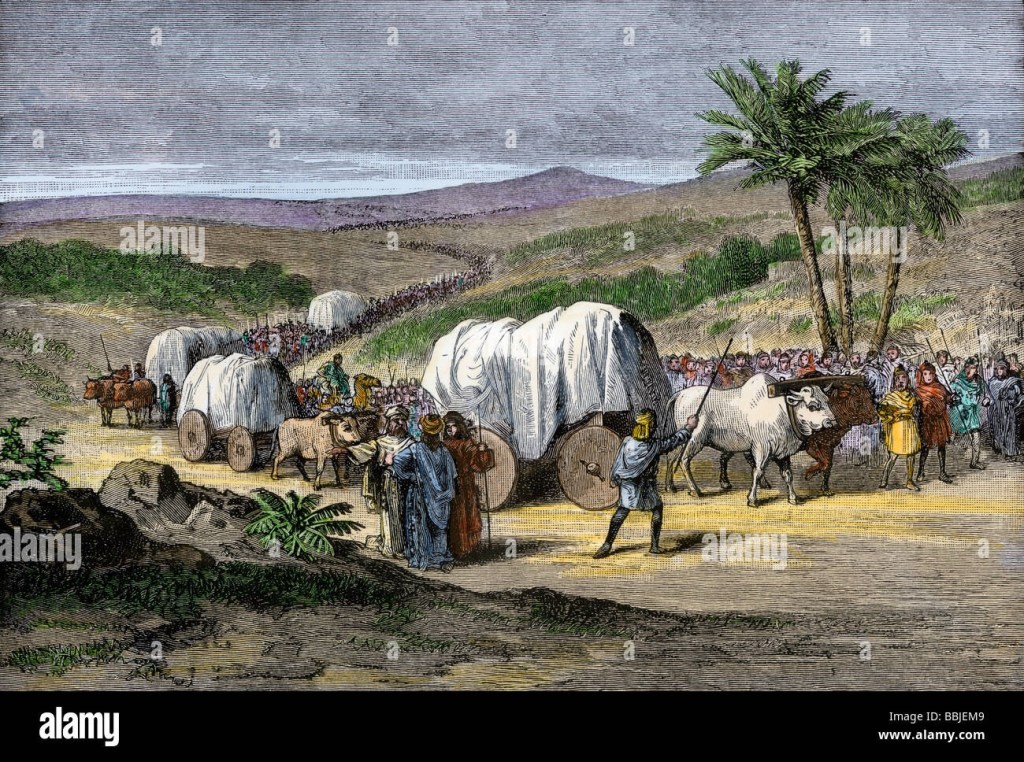
God also led them circuitously initially to avoid war (Exodus 13:17-18: “Lest the people change their minds when they see war and return to Egypt”)
The story isn’t about inefficient travel but God’s patience, provision (manna, water, cloud/pillar guidance), and holiness. The wanderings refined Israel into a nation ready for inheritance. Reducing it to a distance joke misses the point: human sin delayed blessing, yet God remained faithful.
Conclusion
This critique isn’t just geographically off-base; it’s a shallow jab that misrepresents the Bible’s depth. By conflating modern borders with ancient events and ignoring the explicit reasons for the 40 years, the poster exposes their own lack of engagement rather than any scriptural flaw. The Israelites’ story is one of human frailty and divine grace—a journey not measured in kilometers, but in faith.
If you’re a skeptic, I encourage you to read Numbers 13-14 for yourself. And to the critic: next time, let’s discuss with accuracy and respect. After all, true wonder often lies beyond the shortest path.

 Why Jesus Apologetics
We welcome respectful comments and questions as we explore the truth of the gospel.